|
|
|---|
Thursday, October 14, 2010
Pagani Sport Cars Pagani Zonda 750 Hypercar 2010

Pagani Sport Cars Pagani Zonda 750 Hypercar 2010


Pagani Sport Cars Pagani Zonda 750 Hypercar 2010
Pagani Sport Cars Pagani Zonda 750 Hypercar 2010
Pagani Sport Cars Pagani Zonda 750 Hypercar 2010
Saturday, October 3, 2009
Pagani Zonda R Clubsport full cell concept sport car
 Pagani Zonda R Clubsport full cell concept sport car
Bodywork In addition to the wheelbase increase (47 mm), overall length has increased by 394 mm (15.5 in) and track by 50 mm (2 in). The bodywork and aerodynamics have been altered to offer maximum downforce, featuring a longer front bonnet with flaps, a closed underbody and a new rear overhang with adjustable rear wing and race-derived diffuser. These are intended to translate into increased aerodynamic efficiency and downforce for maximum cornering speed. It is also noted that the car's new rear bodywork is minimal in the extreme, being composed mostly of vent. This is thought to be symptomatic of the need to keep the engine cool enough, even under hard track use. Again, this is similar to the gutted bodywork of the Ferrari Evoluzione.
Engine Output has increased to 750 bhp (559 kW) at 8000 rpm and 523 lb·ft (709 N·m) of torque. A lightweight carbon fibre high performance intake system, racing multiple disc sintered clutch and Formula 1-style exhaust system, hydroformed in Inconel 625 and ceramic coated for optimal heat dissipation, have been added. The engine is combined with a 6-speed transverse-mounted manual sequential synchronized gearb
Interior The car's interior is spartan reflecting the car's racetrack aspirations and intended home, and features bespoke seats, customized to the driver to offer maximum support. As before, the Digitek instrumentation provides essential information and the sophisticated telemetry allows a variety of sensors to monitor numerous aspects of the car.
Pagani Zonda R Clubsport full cell concept sport car
Pagani Zonda R Clubsport full cell concept sport carBodywork In addition to the wheelbase increase (47 mm), overall length has increased by 394 mm (15.5 in) and track by 50 mm (2 in). The bodywork and aerodynamics have been altered to offer maximum downforce, featuring a longer front bonnet with flaps, a closed underbody and a new rear overhang with adjustable rear wing and race-derived diffuser. These are intended to translate into increased aerodynamic efficiency and downforce for maximum cornering speed. It is also noted that the car's new rear bodywork is minimal in the extreme, being composed mostly of vent. This is thought to be symptomatic of the need to keep the engine cool enough, even under hard track use. Again, this is similar to the gutted bodywork of the Ferrari Evoluzione.
Engine Output has increased to 750 bhp (559 kW) at 8000 rpm and 523 lb·ft (709 N·m) of torque. A lightweight carbon fibre high performance intake system, racing multiple disc sintered clutch and Formula 1-style exhaust system, hydroformed in Inconel 625 and ceramic coated for optimal heat dissipation, have been added. The engine is combined with a 6-speed transverse-mounted manual sequential synchronized gearb
Interior The car's interior is spartan reflecting the car's racetrack aspirations and intended home, and features bespoke seats, customized to the driver to offer maximum support. As before, the Digitek instrumentation provides essential information and the sophisticated telemetry allows a variety of sensors to monitor numerous aspects of the car.
Sunday, January 18, 2009
Pagani Zonda R officially unveiled in Vienna

The Pagani Zonda did something incredible. It proved that the supercar world did not revolve around Ferrari and Lamborghini. So to commemorate Horacio Pagani's achievement, the hypercarmaker has created one last version of the Zonda before its replacement arrives next year.
After 24 months of development, and at the urging of an unnamed Italo-American customer that already owns three Zondas, the Pagani Zonda R was created as a lightweight, track-only variant of the iconic coupe. Production is limited to ten examples with a price tag of 1.4-million euro.
Although the carbon fiber exterior is deceiving, the Pagani Zonda R only carries over 10% of its structure from its predecessors. The wheelbase has grown by 47mm, the overall length is 394mm longer and the track has been widened by 50mm.
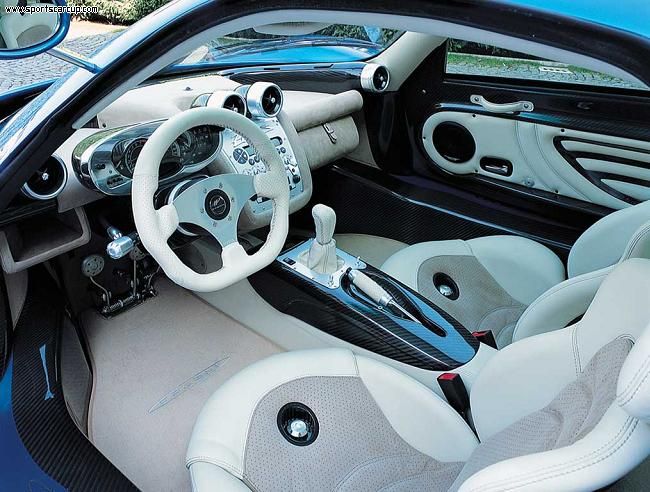

An all-new carbon fiber monocoque resides underneath the wind-tunnel tested body, along with a forged aluminum suspension, new six-speed sequential gearbox and four aero-spec fuel pumps that feed a Mercedes-Benz AMG-sourced 6.0-liter V12. Pagani claims the new heart – nestled into the 2,425-pound R – will produce 750 hp at 8,000 rpm and 524 lb-ft of torque, for a 0-60 time of 3.2 seconds and a top speed of 248.54 mph. Air is fed into the bent-twelve through a carbon fiber air intake system, while an Inconel manifold and "F1-style" exhaust releases spent hydrocarbons and keeps engine temps in check.
Pagani Zonda R officially unveiled in Vienna
The Pagani Zonda did something incredible. It proved that the supercar world did not revolve around Ferrari and Lamborghini. So to commemorate Horacio Pagani's achievement, the hypercarmaker has created one last version of the Zonda before its replacement arrives next year.
After 24 months of development, and at the urging of an unnamed Italo-American customer that already owns three Zondas, the Pagani Zonda R was created as a lightweight, track-only variant of the iconic coupe. Production is limited to ten examples with a price tag of 1.4-million euro.
Although the carbon fiber exterior is deceiving, the Pagani Zonda R only carries over 10% of its structure from its predecessors. The wheelbase has grown by 47mm, the overall length is 394mm longer and the track has been widened by 50mm.
An all-new carbon fiber monocoque resides underneath the wind-tunnel tested body, along with a forged aluminum suspension, new six-speed sequential gearbox and four aero-spec fuel pumps that feed a Mercedes-Benz AMG-sourced 6.0-liter V12. Pagani claims the new heart – nestled into the 2,425-pound R – will produce 750 hp at 8,000 rpm and 524 lb-ft of torque, for a 0-60 time of 3.2 seconds and a top speed of 248.54 mph. Air is fed into the bent-twelve through a carbon fiber air intake system, while an Inconel manifold and "F1-style" exhaust releases spent hydrocarbons and keeps engine temps in check.
Pagani Zonda R officially unveiled in Vienna
The Pagani Zonda did something incredible. It proved that the supercar world did not revolve around Ferrari and Lamborghini. So to commemorate Horacio Pagani's achievement, the hypercarmaker has created one last version of the Zonda before its replacement arrives next year.
After 24 months of development, and at the urging of an unnamed Italo-American customer that already owns three Zondas, the Pagani Zonda R was created as a lightweight, track-only variant of the iconic coupe. Production is limited to ten examples with a price tag of 1.4-million euro.
Although the carbon fiber exterior is deceiving, the Pagani Zonda R only carries over 10% of its structure from its predecessors. The wheelbase has grown by 47mm, the overall length is 394mm longer and the track has been widened by 50mm.
An all-new carbon fiber monocoque resides underneath the wind-tunnel tested body, along with a forged aluminum suspension, new six-speed sequential gearbox and four aero-spec fuel pumps that feed a Mercedes-Benz AMG-sourced 6.0-liter V12. Pagani claims the new heart – nestled into the 2,425-pound R – will produce 750 hp at 8,000 rpm and 524 lb-ft of torque, for a 0-60 time of 3.2 seconds and a top speed of 248.54 mph. Air is fed into the bent-twelve through a carbon fiber air intake system, while an Inconel manifold and "F1-style" exhaust releases spent hydrocarbons and keeps engine temps in check.
Friday, October 17, 2008
Top 7 Most Expensive Cars of the world

The Maybach 57 and 62 were the first automobile models of the Maybach brand since the brand’s revival by DaimlerChrysler. They are derived from the Mercedes-Benz Maybach concept car presented at the 1997 Tokyo Motorshow (which was based on the Mercedes-Benz S-Class sedan). DaimlerChrysler attempted to buy the Rolls-Royce/Bentley marque when Vickers offered the company up for sale. When this att
empt failed (they were outbid by BMW and Volkswagen respectively) they introduced the Maybach as a direct challenger in 2002. Both models are variants of the same ultra-luxurious automobile. The model numbers reflect the respective lengths of the automobiles in decimetres; the 57 is more likely to
be owner-driven while the longer 62 is designed with a chauffeur in mind. The engine is a Mercedes-sourced 5.5-liter twin-turbo V12, generating 550 hp.
6. Mercedes SLR McLaren $455,500

The Mercedes-Benz SLR McLaren is a sports car and supercar automobile co-developed by DaimlerChrysler and McLaren Cars. It is assembled at the McLaren Technology Centre in Woking, England. Most people presume “SLR” to stand for “Sportlich, Leicht, Rennsport” (German for “Sport; Light; Racing”). The car’s base price is £300,000 or $455,500. The SLR has a supercharged 5.5 (5439cc) litre dry sumped 90 degree V8. It produces 466.8 kW at 6500rpm (626 hp) and 780 N·m (575 ft·lbf)
5. Porsche Carrera GT $484,000

The Porsche Carrera GT is a supercar, manufactured by Porsche of Germany. The Carrera GT is powered by an all-new 5.7 litre V10 engine producing 612 SAE horsepower (450 kW). Porsche claims it will accelerate from 0 to 100 km/h (62.5 mph) in 3.9 seconds and has a maximum speed of 330 km/h (206 mph), although road tests indicated that in actuality the car could accelerate from 0-60 in under 3.5 seconds and to 0-100 in 6.8 seconds and has a top speed of 335-340km/h.
4. Koenigsegg CCX $600,910

The Koenigsegg CCX is the latest supercar from Koenigsegg. CCX is an abbreviation for Competition Coupe X. The X commemorates the 10th anniversary of the completion and test drive of the first CC vehicle in 1996. The CCX is intended to be more suitable for the U.S. market and thus engineered to comply with US regulations. The CCX is powered by a Koenigsegg designed and assembled, all aluminium, 4700 cm³ DOHC 32-valve V8 based on the Ford Modular engine architecture enhanced with twin Rotrex centrifugal superchargers with response system, 1.2 bar boost pressure and an 8.2:1 compression ratio. The engine produces 806 hp (601 kW) and 678 lbf.ft (920 Nm) on 91 octane (U.S. rating) gasoline, 850 hp (634 kW) on 96 octane (Euro rating) gasoline and 900 hp (671 kW) on biofuel.
3. Pagani Zonda C12 F $741,000

The Zonda C12 F debuted at the 2005 Geneva Motor Show. It is the most extensive reengineering of the Pagani car yet, though it shares much with its predecessors including the 7.3 L V12. Power is increased to 602 PS (443 kW/594 hp) with a special clubsport model producing 650 PS (478 kW/641 hp). The company promises a 3.2 second sprint to 60 mph (97 km/h, a top speed over 374 km/h (225 mph) and it will be the queen in braking from 300 km/h to 0 (186 mph to 0). The Zonda F clubsport has a power to weight ratio of 521 bhp/ton (384 W/kg) . Compare, for example, the Enzo Ferrari which has a power to weight ratio of 483 bhp/ton (356 W/kg).
2. Ferrari Enzo $1,000,000

The Enzo Ferrari, sometimes referred to as the the Ferrari Enzo and also F60 is a 12-cylinder Ferrari supercar named after the company’s founder, Enzo Ferrari. It was built in 2003 using Formula One technology, such as a carbon-fiber body, F1-style sequential shift transmission, and carbon-ceramic brake discs. Also used are technologies not allowed in F1 such as active aerodynamics. After a maximum downforce of 1709 pounds (775 kg) is reached at 186 mph (301 km/h) the rear spoiler is actuated by computer to maintain that downforce.
1. Bugatti Veyron $1,700,000


The Bugatti Veyron 16.4 is the most powerful, most expensive, and fastest street-legal production car in the world, with a proven top speed of over 400 km/h (407 km/h or 253 mph). It reached full production in September 2005. The car is built by Volkswagen AG subsidiary Bugatti Automobiles SAS and is sold under the legendary Bugatti marque. It is named after racing driver Pierre Veyron, who won the 24 hours of Le Mans in 1939 while racing for the original Bugatti firm. The Veyron features a W16 engine—16 cylinders in 4 banks of 4 cylinders. According to Volkswagen, the final production Veyron engine produces between 1020 and 1040 metric hp (1006 to 1026 SAE net hp), so the car will be advertised as producing “1001 horsepower” in both the US and European markets. This easily makes it the most powerful production road-car engine in history.
Top 7 Most Expensive Cars of the world
The Maybach 57 and 62 were the first automobile models of the Maybach brand since the brand’s revival by DaimlerChrysler. They are derived from the Mercedes-Benz Maybach concept car presented at the 1997 Tokyo Motorshow (which was based on the Mercedes-Benz S-Class sedan). DaimlerChrysler attempted to buy the Rolls-Royce/Bentley marque when Vickers offered the company up for sale. When this att
empt failed (they were outbid by BMW and Volkswagen respectively) they introduced the Maybach as a direct challenger in 2002. Both models are variants of the same ultra-luxurious automobile. The model numbers reflect the respective lengths of the automobiles in decimetres; the 57 is more likely to
be owner-driven while the longer 62 is designed with a chauffeur in mind. The engine is a Mercedes-sourced 5.5-liter twin-turbo V12, generating 550 hp.
6. Mercedes SLR McLaren $455,500
The Mercedes-Benz SLR McLaren is a sports car and supercar automobile co-developed by DaimlerChrysler and McLaren Cars. It is assembled at the McLaren Technology Centre in Woking, England. Most people presume “SLR” to stand for “Sportlich, Leicht, Rennsport” (German for “Sport; Light; Racing”). The car’s base price is £300,000 or $455,500. The SLR has a supercharged 5.5 (5439cc) litre dry sumped 90 degree V8. It produces 466.8 kW at 6500rpm (626 hp) and 780 N·m (575 ft·lbf)
5. Porsche Carrera GT $484,000
The Porsche Carrera GT is a supercar, manufactured by Porsche of Germany. The Carrera GT is powered by an all-new 5.7 litre V10 engine producing 612 SAE horsepower (450 kW). Porsche claims it will accelerate from 0 to 100 km/h (62.5 mph) in 3.9 seconds and has a maximum speed of 330 km/h (206 mph), although road tests indicated that in actuality the car could accelerate from 0-60 in under 3.5 seconds and to 0-100 in 6.8 seconds and has a top speed of 335-340km/h.
4. Koenigsegg CCX $600,910
The Koenigsegg CCX is the latest supercar from Koenigsegg. CCX is an abbreviation for Competition Coupe X. The X commemorates the 10th anniversary of the completion and test drive of the first CC vehicle in 1996. The CCX is intended to be more suitable for the U.S. market and thus engineered to comply with US regulations. The CCX is powered by a Koenigsegg designed and assembled, all aluminium, 4700 cm³ DOHC 32-valve V8 based on the Ford Modular engine architecture enhanced with twin Rotrex centrifugal superchargers with response system, 1.2 bar boost pressure and an 8.2:1 compression ratio. The engine produces 806 hp (601 kW) and 678 lbf.ft (920 Nm) on 91 octane (U.S. rating) gasoline, 850 hp (634 kW) on 96 octane (Euro rating) gasoline and 900 hp (671 kW) on biofuel.
3. Pagani Zonda C12 F $741,000
The Zonda C12 F debuted at the 2005 Geneva Motor Show. It is the most extensive reengineering of the Pagani car yet, though it shares much with its predecessors including the 7.3 L V12. Power is increased to 602 PS (443 kW/594 hp) with a special clubsport model producing 650 PS (478 kW/641 hp). The company promises a 3.2 second sprint to 60 mph (97 km/h, a top speed over 374 km/h (225 mph) and it will be the queen in braking from 300 km/h to 0 (186 mph to 0). The Zonda F clubsport has a power to weight ratio of 521 bhp/ton (384 W/kg) . Compare, for example, the Enzo Ferrari which has a power to weight ratio of 483 bhp/ton (356 W/kg).
2. Ferrari Enzo $1,000,000
The Enzo Ferrari, sometimes referred to as the the Ferrari Enzo and also F60 is a 12-cylinder Ferrari supercar named after the company’s founder, Enzo Ferrari. It was built in 2003 using Formula One technology, such as a carbon-fiber body, F1-style sequential shift transmission, and carbon-ceramic brake discs. Also used are technologies not allowed in F1 such as active aerodynamics. After a maximum downforce of 1709 pounds (775 kg) is reached at 186 mph (301 km/h) the rear spoiler is actuated by computer to maintain that downforce.
1. Bugatti Veyron $1,700,000
The Bugatti Veyron 16.4 is the most powerful, most expensive, and fastest street-legal production car in the world, with a proven top speed of over 400 km/h (407 km/h or 253 mph). It reached full production in September 2005. The car is built by Volkswagen AG subsidiary Bugatti Automobiles SAS and is sold under the legendary Bugatti marque. It is named after racing driver Pierre Veyron, who won the 24 hours of Le Mans in 1939 while racing for the original Bugatti firm. The Veyron features a W16 engine—16 cylinders in 4 banks of 4 cylinders. According to Volkswagen, the final production Veyron engine produces between 1020 and 1040 metric hp (1006 to 1026 SAE net hp), so the car will be advertised as producing “1001 horsepower” in both the US and European markets. This easily makes it the most powerful production road-car engine in history.
Top 7 Most Expensive Cars of the world
The Maybach 57 and 62 were the first automobile models of the Maybach brand since the brand’s revival by DaimlerChrysler. They are derived from the Mercedes-Benz Maybach concept car presented at the 1997 Tokyo Motorshow (which was based on the Mercedes-Benz S-Class sedan). DaimlerChrysler attempted to buy the Rolls-Royce/Bentley marque when Vickers offered the company up for sale. When this att
empt failed (they were outbid by BMW and Volkswagen respectively) they introduced the Maybach as a direct challenger in 2002. Both models are variants of the same ultra-luxurious automobile. The model numbers reflect the respective lengths of the automobiles in decimetres; the 57 is more likely to
be owner-driven while the longer 62 is designed with a chauffeur in mind. The engine is a Mercedes-sourced 5.5-liter twin-turbo V12, generating 550 hp.
6. Mercedes SLR McLaren $455,500
The Mercedes-Benz SLR McLaren is a sports car and supercar automobile co-developed by DaimlerChrysler and McLaren Cars. It is assembled at the McLaren Technology Centre in Woking, England. Most people presume “SLR” to stand for “Sportlich, Leicht, Rennsport” (German for “Sport; Light; Racing”). The car’s base price is £300,000 or $455,500. The SLR has a supercharged 5.5 (5439cc) litre dry sumped 90 degree V8. It produces 466.8 kW at 6500rpm (626 hp) and 780 N·m (575 ft·lbf)
5. Porsche Carrera GT $484,000
The Porsche Carrera GT is a supercar, manufactured by Porsche of Germany. The Carrera GT is powered by an all-new 5.7 litre V10 engine producing 612 SAE horsepower (450 kW). Porsche claims it will accelerate from 0 to 100 km/h (62.5 mph) in 3.9 seconds and has a maximum speed of 330 km/h (206 mph), although road tests indicated that in actuality the car could accelerate from 0-60 in under 3.5 seconds and to 0-100 in 6.8 seconds and has a top speed of 335-340km/h.
4. Koenigsegg CCX $600,910
The Koenigsegg CCX is the latest supercar from Koenigsegg. CCX is an abbreviation for Competition Coupe X. The X commemorates the 10th anniversary of the completion and test drive of the first CC vehicle in 1996. The CCX is intended to be more suitable for the U.S. market and thus engineered to comply with US regulations. The CCX is powered by a Koenigsegg designed and assembled, all aluminium, 4700 cm³ DOHC 32-valve V8 based on the Ford Modular engine architecture enhanced with twin Rotrex centrifugal superchargers with response system, 1.2 bar boost pressure and an 8.2:1 compression ratio. The engine produces 806 hp (601 kW) and 678 lbf.ft (920 Nm) on 91 octane (U.S. rating) gasoline, 850 hp (634 kW) on 96 octane (Euro rating) gasoline and 900 hp (671 kW) on biofuel.
3. Pagani Zonda C12 F $741,000
The Zonda C12 F debuted at the 2005 Geneva Motor Show. It is the most extensive reengineering of the Pagani car yet, though it shares much with its predecessors including the 7.3 L V12. Power is increased to 602 PS (443 kW/594 hp) with a special clubsport model producing 650 PS (478 kW/641 hp). The company promises a 3.2 second sprint to 60 mph (97 km/h, a top speed over 374 km/h (225 mph) and it will be the queen in braking from 300 km/h to 0 (186 mph to 0). The Zonda F clubsport has a power to weight ratio of 521 bhp/ton (384 W/kg) . Compare, for example, the Enzo Ferrari which has a power to weight ratio of 483 bhp/ton (356 W/kg).
2. Ferrari Enzo $1,000,000
The Enzo Ferrari, sometimes referred to as the the Ferrari Enzo and also F60 is a 12-cylinder Ferrari supercar named after the company’s founder, Enzo Ferrari. It was built in 2003 using Formula One technology, such as a carbon-fiber body, F1-style sequential shift transmission, and carbon-ceramic brake discs. Also used are technologies not allowed in F1 such as active aerodynamics. After a maximum downforce of 1709 pounds (775 kg) is reached at 186 mph (301 km/h) the rear spoiler is actuated by computer to maintain that downforce.
1. Bugatti Veyron $1,700,000
The Bugatti Veyron 16.4 is the most powerful, most expensive, and fastest street-legal production car in the world, with a proven top speed of over 400 km/h (407 km/h or 253 mph). It reached full production in September 2005. The car is built by Volkswagen AG subsidiary Bugatti Automobiles SAS and is sold under the legendary Bugatti marque. It is named after racing driver Pierre Veyron, who won the 24 hours of Le Mans in 1939 while racing for the original Bugatti firm. The Veyron features a W16 engine—16 cylinders in 4 banks of 4 cylinders. According to Volkswagen, the final production Veyron engine produces between 1020 and 1040 metric hp (1006 to 1026 SAE net hp), so the car will be advertised as producing “1001 horsepower” in both the US and European markets. This easily makes it the most powerful production road-car engine in history.