Showing posts with label Lotus. Show all posts

Friday, March 25, 2011

2010 Lotus RGB Special Edition

2010 Lotus Elise SC RGB Special Edition View 2010 Lotus RGB Special Edition

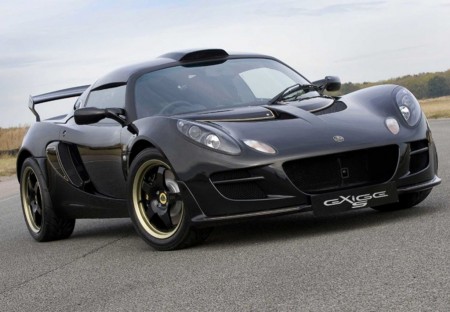
Recently made a special edition Lotus Exige and Elise on the RGB is marked with the initials, the name of Roger Becker, Director of Lotus Engineering Vehicles. Both limited edition models are offered in four colours: Aspen White, Starlight Black, Solar Yellow and Carbon Grey. The cars also carry Roger Becker’s signature on the side of the bodywork, a numbered interior plaque and a monochrome Lotus badge on the nose.

The both are Elise SC RGB and Exige S RGB special editions come with both Sports and Touring packs as standard. The Elise, with a supercharged 1.8-litre engine developing 217bhp, should do 0-60mph in 4.3 seconds according to the manufacturer. With an intercooler and an extra 40bhp the Exige should get the 0-60mph time down to about four seconds.

The Lotus RGB Special Edition models will go on sale in September. Are you one of waiter this edition?

2010 Lotus Exige S RGB Special Edition View 2010 Lotus RGB Special Edition

2010 Lotus Fuel Cell Taxi Concept

2010 Lotus Fuel Cell Taxi Concept Front Side View 2010 Lotus Fuel Cell Taxi Concept

This taxi concept is a prototype vehicle developed by Lotus with zero emissions fuel cell hybrid system. London Mayor, Boris Johnson, wants all the city’s taxis to have zero emissions by 2020 and Lotus, along with the other project partners, is aiming to get an initial fleet of 20 such vehicles on the road for the Olympics in 2012.

Under the bonnet lies an enormous 154-litre tank filled with hydrogen. The fuel cell itself is located in the transmission tunnel where the gearbox would normally be, while the battery packs are mounted underneath the centre of the car, face down, so they’re easy to access for tinkering purposes. Finally, the electric motor sits on a new sub frame in between the rear wheels.

Flexible Lotus Fuel Cell Taxi Concept’s interior space as there would normally be, so passengers, luggage and wheelchairs can fit in just as easily. There’s a small LCD screen on the dash that displays the fuel cell’s vitals and tells you when it’s ready to start.

LTI, the manufacturer of the London taxi and a partner in the project, doesn’t quote an acceleration figure, but the instant torque from the electric motor, combined with the fuel cell’s power, shaves around three or four seconds off the 0-62mph time. You’re still looking at about 15 seconds, but that’s enough to smoke rival cabbies at the lights. The fuel cell produces 30kW (40bhp), while the electric motor kicks out 55kW (74bhp) on average and has a 100kW (134bhp) peak.

Filling up with hydrogen is no more difficult or lengthy than usual, but the snag, for the moment, is a complete lack of filling stations that supply it. That will change though, as London is scheduled to have six operational hydrogen fuel forecourts by the time the first fleet of fuel cell cabs goes live in 2012 and more will undoubtedly follow.

2010 Lotus Fuel Cell Taxi Concept Side View 2010 Lotus Fuel Cell Taxi Concept

2010 Lotus Fuel Cell Taxi Concept Rear Side View 2010 Lotus Fuel Cell Taxi Concept

2010 Lotus Fuel Cell Taxi Concept Seats View 2010 Lotus Fuel Cell Taxi Concept

2010 Lotus Fuel Cell Taxi Concept Electric Motor View 2010 Lotus Fuel Cell Taxi Concept

2011 Lotus Evora S

2011 Lotus Evora S Front Side Top View 2011 Lotus Evora S

2011 Lotus Evora S with a 350 PS 3.5l V6 engine. It has little different from standard Evora. It’s the next level of Evora experience. It communicates with you better, the suspension setting has been fine tuned for added power and control so it responds even more to direction. It’s an instinctual car, the experience is pure. The Evora S, set to be unveiled at the 2010 Paris Motor Show.

The Evora S comes with a sport pack as standard featuring a ‘sport’ button which allows the driver to control throttle response and activate the exhaust by-pass valve. The sport button also raises the instantaneous rev limit and changes the dynamic stability control settings resulting in a total experience change.

The external emotion of the Lotus Evora S has been improved with a completely new active exhaust which means that at the push of a button the car sounds just as dramatic as it feels.

Lotus Evora S Technical Specification

Engine: Mid mounted, transverse 3.5 litre DOHC V6 VVT-I
Transmission: 6 speed manual
Chassis: Modular lightweight bonded aluminium structure
Steering: Lotus tuned hydraulically-assisted power steering
Suspension

  • Forged aluminium double wishbone suspension
  • Bilstein high performance gas dampers
  • Eibach coaxial coil springs

Fuel consumption (Standard wheel option)

  • urban: 14.5 l/100km
  • extra urban: 7.4 l/100km
  • combined: 10.0l/100km
  • CO2 Emissions: 235 g/km

Fuel consumption (19/20″ wheel option)

  • urban: 14.6 I/100km
  • extra urban: 7.6 I/100km
  • combined: 10.2 I/100km
  • CO2 Emissions: 239 g/km

Max power: 350 PS / 257.5 kW @ 7000 rpm
Max torque: 400 Nm / 295 lb ft @ 4500 rpm
0-60 mph: 4.6s
0-100 km/h: 4.8s
Maximum speed: 172mph
Vehicle mass (unladen): 1437kg

2011 Lotus Evora S Rear Side Top View 2011 Lotus Evora S

2011 Lotus Evora S Steering Wheel View 2011 Lotus Evora S

2010 Lotus Elite Concept

2010 Lotus Elite Concept Front Side Top View 2010 Lotus Elite Concept

Lotus Elite Concept hopes will bring a sense of dignified grace in appearance, movement, stylish and elegant. It’s compact yet chic body is elegance incarnate.

It is offers the very latest technological innovations Lotus. The slick retractable hard top version and the optional use of hybrid technology with KERS are typical examples of Lotus tailoring technology to deliver perfect performance.

Lotus Elite Concept Specification

* Layout: 2 2 seater, front-mid-engined, rear wheel drive
* Dimensions

  • Length: 4.60m
  • Width: 1.90m
  • Height: 1.32m

* Engine

  • Type: Petrol, hybrid optional
  • Hybrid technology: Hybrid gearbox with integrated electric motors and KERS
  • Cylinder: V8
  • Capacity: 5.0 litre
  • Power: 620 PS
  • Torque: 720 Nm
  • Rev limit: 8,500 rpm

* Performance

  • 0-100 km/h: 3.5 to 3.7 seconds
  • Top speed: 315 km/h

* CO2 Emissions: 215 g/km (using optional hybrid)
* Weight: 1,650 kg
* Seats: 2 2
* Transmission: Full Hybrid transmission
* Drive: RWD
* Start of production: Early 2014
* Enters the market: Spring 2014
* Price indication: ca. £115,000

2010 Lotus Elite Concept Side Top View 2010 Lotus Elite Concept

2010 Lotus Elite Concept Front Top View 2010 Lotus Elite Concept

2010 Lotus Elite Concept Rear Top View 2010 Lotus Elite Concept

Friday, January 14, 2011

Lotus Evora For Police Cars

PC Steven Rounds from, CMPG said: “The Lotus is a visually stunning machine which offers us the opportunity to engage with the public, reinforce and promote the life-saving messages of road safety.

http://4.bp.blogspot.com/_FoXyvaPSnVk/TTDOC8maFYI/AAAAAAAD2dw/lh0q75syfRA/s1600/Carscoop-Lotus-Evora-2.jpg

http://2.bp.blogspot.com/_FoXyvaPSnVk/TTDODH-TWDI/AAAAAAAD2d4/8x0fATziUcw/s1600/Carscoop-Lotus-Evora-3.jpg
Lotus has loaned a brand new Evora to the boys in blue at the Central Motorway Police Group (CPMG). The police-liveried version of the British sports car was officially revealed at this week's Autosport International Show at Birmingham’s NEC. Once its show duties are over, the sports car maker will hand the keys of the Evora to West Midland's police officers who will then trial the car for a two week test period.
http://4.bp.blogspot.com/_FoXyvaPSnVk/TTDOCxxKs7I/AAAAAAAD2do/nyiplmQnH80/s1600/Carscoop-Lotus-Evora-1.jpg
Lotus Evora For Police Cars

Wednesday, January 5, 2011

2010 Lotus Evora Carbon Concept

2010 Lotus Evora Carbon Concept Front Angle View 2010 Lotus Evora Carbon Concept

The Lotus Evora Carbon Concept car retains the same class leading handling and high tech aluminium bonded and extruded chassis of the production car. The striking white concept car is finished in an advanced water based pearlesent paint that contrasts with the exquisitely finished weave on the carbon fibre panels. The head turning looks of the Lotus Evora Carbon Concept car provide a more purposeful, planted stance with the car looking lower and more aggressive. This styling direction is continued with a structural carbon fibre roof.

2010 Lotus Evora Carbon Concept Rear Angle View 2010 Lotus Evora Carbon Concept

The Lotus Evora Carbon Concept car emphasises Lotus’ motorsport pedigree, utilising beautiful high quality materials with exposed carbon fibre and plush alcantara. high tech materials that offer a good synergy with the Lotus brand image, expressing our motorsport heritage and history of stylish sports cars for which Lotus are renowned. It’s has diamond cut forged 19″ alloy wheels front and rear, shod with Pirelli P-Zero Corsa tyres (235/35 wide front and 285/30 wide rear).

The bespoke interior uses swathes of sumptuous grey alcantara to cover the footwell, dashboard and roof. The contemporary interior of the Lotus Evora Carbon Concept car combines the lustre of the carbon panels with perforated leather and matt alcantara.

2010 Lotus Evora Carbon Concept Interior View 2010 Lotus Evora Carbon Concept

2010 Lotus Evora Carbon Concept Front Side View 2010 Lotus Evora Carbon Concept

2010 Lotus Evora Carbon Concept Rear Side View 2010 Lotus Evora Carbon Concept

2011 Lotus Elise

2011 Lotus Elise Front View 2011 Lotus Elise

Lotus tried to maintain the leading position of its kind to introduce some changes and improvements. This is proved by making its debut at the 80th Geneva International Motorshow , the 2011 model year Lotus Elise. This car was able to produce supercar performance with city car economy.

Of the body offers an interesting mix of styles, dramatic and functional. But still maintain the character and style of two-seat sports car Lotus typical. The new Lotus Elise body has a fresh sculptured front, including a new bumper, front clam. At the rear of the car the new engine has been encased by a distinctive “twin-spine” engine cover whilst lower down a more aggressive diffuser is tightly wrapped by an elegant new bumper design that now includes the rear licence plate. The rear boot is now opened from the cockpit rather than via a separate key operation. The high quality feel of the Lotus Elise is continued throughout the car with the Lotus Elise graphic incorporated into the new side LED direction indicators, like those on the Lotus Evora.

2011 Lotus Elise Wheel View 2011 Lotus Elise

While changes to the engine, this new engine is 200cc smaller than the outgoing Lotus Elise S model and produces similar power (136 PS, 100 kW, 134 hp at 6800 rpm) with maximum torque of 160 Nm, 118 lbft at 4400 rpm, but offers a significant improvement to fuel economy of over 23%, to 6.14 litres / 100km (46 mpg) and a reduction in CO2 emission by more than 13%. This provides the new Lotus Elise with the lowest CO2 per performance for any gasoline high performance sportscar in the world. This high technology engine is mated to a new 6-speed manual gearbox, providing closer and more performance orientated ratios than the outgoing 5 speed box.

2011 Lotus Elise Front Angle View 2011 Lotus Elise

2011 Lotus Elise Rear Side View 2011 Lotus Elise

2010 Lotus Exige S Type 72

2010 Lotus Exige S Type 72 Front Angle View 2010 Lotus Exige S Type 72

Lotus makes Lotus Exige S Type 72, is a special edition cars to celebrate the victory F1 Type 72. Lotus Exige S Type 72 is made using black color and gold color scheme. The Lotus Type 72 Formula One car, which achieved 20 Grand Prix victories between 1970 and 1975.

Here are the great drivers championship-winning The Lotus Type 72 are :
Jochen Rindt, Emerson Fittipaldi, Ronnie Peterson and Jacky Ickx and won three Formula One Constructors Championships (1970, 1972 and 1973) and two Drivers World Championships (the first being won by Jochen Rindt in 1970 and the second by Emerson Fittipaldi in 1972).

2010 Lotus Exige S Type 72 Side View 2010 Lotus Exige S Type 72

2010 Lotus Exige S Type 72 Seater View 2010 Lotus Exige S Type 72

Lotus Exige S Type 72 with Performance through light weight has long been a Lotus philosophy. The 935kg Exige S Type 72 sprints to 60 mph in just 4.5 seconds and to 100 km/h in 4.7 seconds, before reaching a top speed of 145 mph, 233 km/h. The Exige S Type 72 also offers class leading fuel economy and emissions, with fuel economy of 6.5 litres/100 km (43.5 mpg) on the Extra Urban Cycle and CO2 emissions of 199 g/km.

The Exige S Type 72 is a powerful supercharged mid-engined sportscar that is equally at home on the racetrack or open road. The intercooled engine has VVTL-i technology ensuring impressive performance all the way to the rev limiter at 8500 rpm.

The Sport Pack comes as standard on the Exige S Type 72 which has a bespoke high quality interior, including black micro fibre ProBax sports seats with gold stitching. Each car comes with a special build plate commemorating one of the F1 car’s 20 Grand Prix victories. The exterior of the Exige S Type 72 features unique black and gold light weight wheels and is finished with hand-painted gold Type 72 and Exige S logos, (the Sport Pack also includes a T45 steel main roll hoop, Lotus Traction Control, twin oil coolers and an adjustable front anti-roll bar).

2010 Lotus Exige S Type 72 Rear Side View 2010 Lotus Exige S Type 72

2009 Lotus F1 Racing Takes Model to the Windtunnel

  2009 Lotus F1 Racing Takes Model to the Windtunnel

Wednesday, October 14, 2009 – Just one month after confirmation of its entry into the 2010 FIA Formula 1 World Championship, Lotus F1 Racing is headed to the windtunnel with the first scale model Formula 1 car. Yet undesignated model is the product of the latest collaboration between Lotus F1 Racing Chief Technical Officer Mike Gascoyne and the team’s technical partners, and represents an important step in preparing the team for next season.

The beginning of each windtunnel testing is an important step in the development of a Formula 1 car is new, but very interesting for us as we continue to prepare for our first season. It has become very busy since our entry is justified by the FIA. We have worked on entries for a few months, so we already have the team aspect of the infrastructure in place, financial, manufacturing and top management. After our entry was confirmed in mid-September, we were able to accelerate the recruitment and development process of our car and this really where we are now.

  2009 Lotus F1 Racing Takes Model to the Windtunnel
Our input is only possible thanks to funding from the private sector of Malaysia, so the Lotus F1 Racing Team Malaysia will be through and through. In addition we have the valuable support from the Malaysian government through the initiative 1Malaysia, so we will basically fly the flag at the Malaysian Formula 1. I am working with our team chief Tony Fernandes about our plans and everyday I’m spending time in Malaysia interviewing potential candidates for technical roles. The team is also in the process of hiring Malaysia for other positions, including administration, marketing and PR.

The long-term vision is to create a center of technical excellence at the Sepang circuit that we begin to plan together with Tony Fernandes and his associates. Of course this takes time, so we chose to base the UK beginning in the RTN in Hingham facility from where we will run the F1 operation as we build our Malaysia facility. In the end, the team will be headquartered in Malaysia, but we’ll save a small British base that will give us advantages when we ran the logistics in Europe.

We have worked with to develop Fondtech aerodynamics, and also with specialist Xtrac gearbox. We have an engine supply agreement in place with Cosworth and we also had the support of technical teams and composites in Malaysia that will play an integral role in the development of this car.

2009 Lotus Exige Cup 260

 2009 Lotus Exige Cup 260

Lotus Cars Ltd, has unveiled the MY 2009 Lotus Exige Cup 260. A direct development of the 2008 Exige Cup Car, this year’s car uses advanced light weight components and carbon fibre body material, to reduce the overall weight by 38 kg to a total mass less than 900 kg. Maximum power output of 257 hp (260 PS), remains the same as the 2008 car, but with careful attention to weight reduction detail, the 2009 Lotus Exige Cup 260 provides a more agile and dynamic track focused drive and is more than capable of taming Europe’s most challenging race circuits.

Unusually for such a focused track and road machine, the 2009 Lotus Exige Cup 260 is fully homologated for road use in Europe and key markets in Asia – a must have for many race competition programmes where a road legal car has to be entered. The Lotus Exige Cup 260 is also eligible to compete in the newly announced 2009 Lotus Cup Europe race series organized and run by LoTRDC. The Lotus Exige Cup 260 exploits the Lotus philosophy of using weight reduction to increase performance and reduce emissions.

 2009 Lotus Exige Cup 260

Mike Kimberley, Chief Executive of Group Lotus commented, “Lotus is now recognised globally as one of the leaders in the green automotive revolution. Colin Chapman, the founder of Lotus is attributed as saying “Adding power makes you faster on the straights; adding lightness makes you faster everywhere” and this statement is more relevant today than it ever has been, as decreasing weight increases the car’s performance and most importantly efficiency.”

 2009 Lotus Exige Cup 260
 2009 Lotus Exige Cup 260

Monday, January 3, 2011

2011 Lotus Elise

2011 Lotus Elise picture2011 Lotus Elise show

Slightly re-design, a basic cost of the new Lotus Elise is now twenty-seven thousand four hundred and fifty pounds in the UK. In the U.S., a new Lotus Elise is a more powerful car, but the price from forty-seven thousand two hundred and fifty U.S. dollars. Before you go, and that £ 27.450 approximately equal to 40,000 dollars in the United States, consider this: the British have the ability to buy a Lotus Elise around the same price as the Nissan 370Z. If only the same is true for us. British payment less a simple Lotus Elise than a BMW 135i - the reverse of the story for the U.S. consumers.

I do not care about the reason; the cost of manufacturing and sales, manufacturing shipments in the United Kingdom and the United Kingdom before the larger open boat across the Atlantic to sell some widely disseminated dealers. I just want to .... I wish the Lotus Elise is a high value proposition here, it is there.

2011 Lotus Elise image2011 Lotus Elise picture

Compare a Nissan 370Z and the Lotus Elise is not so different comparing apples and oranges. Japan's V6 engine is the engine of a brutal, driving pleasure in a "I'm the boss" kind of way. The other is designed in Hethel and at the base UKDM form, using only the 1.6-liter 134 horsepower. Lotus Elise a project, the road as unindicted co-conspirators weaving flow and peristalsis and dexterity; allows its drivers to feel every crack in the asphalt. In fact, the user can select different UK driving environment at the same price for North American consumers should be green with envy.

2011 Lotus Elise gallery2011 Lotus Elise Sport cars

Green, you say? 2011 Lotus Elise 1.6 only 155 grams of carbon dioxide per kilometer. Using U.S. gallons of fuel economy with the EU cycle, the Lotus Elise 2011 38.3 miles of cars. So enter the ring as a lightweight, Lotus Elise, even if "only" 134 horsepower, less than six seconds to accelerate to 60mph acceleration. Yes, Nissan 370Z faster, but still far less efficient. EPA ratio manual transmission 370Z 21 miles per gallon.

2011 Lotus Elise wallpapers2011 Interior Lotus Elise

But I must point out again that this is not a comparison test of the Nissan 370Z and 2011 Lotus Elise 1.6. Both cars seat two. The internal Z-axis with the necessary technology; Lotus would rather you do not require luxury. Claim by an external source, the Lotus Elise is the best handling car in the world. Nissan 370Zs handler, yes, but so much progress with the grip, with soft little manipulation.


Imagine back to back test drive to know the monthly payment, will be almost the same. Lotus will use less fuel, 370Z will make you feel comfortable. Nissan 370Z to power, are you out of the corner, such as the airship is 332 horsepower, Lotus's Elise can lead directly through the bottom with the throttle.

Lotus has no plans to demonstrate Toyota's 1.6L engine, its North American lineup of Elise. Hard to blame the small Malaysian-owned company. Its sales drop in the bucket of our coast is what challenges need to install a complete establishment of the North American sports car. A miracle, but in the strength of the market may be reliable, evoke, badged with the high price of British exchange certificates and efficiency side.

2010 Lotus Exige S Type 72

Lotus Exige S Type 72 image2010 Lotus Exige S Type 72

The most successful of all time in celebration of the F1 car, the Lotus 72 memorable black and gold, a race car, Yohhenrinto, Emasonfittiparudi, Ronipitason, steering by the driver is marked as Jakkiikusu Enter to win or to gain innovative machine. Jonpureiyasupesharu to commemorate the old English cars Lotus Supesharuedishonekishiji released 72 S type. Only 20 cars for consumers with limited English, and then the destination is limited to select markets such as Japan and the rest of the world and another 20 for the rest of Europe.
Lotus F1 car

Lotus Exige S Type 72 galleryLotus Exige S Type 72 picture

Like a pack of cigarettes from the 1970s to the wheel, the Exige S has some gold accents on the body 72 Exige lightweight gold rim and a set of hand-painted to compliment the type familiar with the 72 S Black Outline Logo types are drawn to the uniforms. 72 types of special edition, gold stitching and air conditioning, a set of black microfiber with options such as the limited slip differential all the way to power through an optional Pafomansupakkubusuto include performance bucket race ProBax enlarged roof scoop comes from the factory-oriented sports pack, Type72 while sitting on a 240 HP Burekireshingu power to stop the AP from the set that comes with.


SUMMARY Korinchappuman comes to the modern, Lotus traction control and launch control Lotus variables, indeed, even Ferrari's rivals, such as the ability of a few tricks and have given the edge multiple Chimurotasu McLaren is one item that you died. Exige S is only 4.5 MPH 0 to 60 seconds of someone entering the 72 sprints, you are close to something like this now puts it acquired € sitting behind the wheel of a real starting at 40,332, John Player 145 MPH top speed can reach is special.

Sunday, December 19, 2010

2010 Lotus Sport Cars T127 Formula One

2010 Lotus Sport Cars T127 Formula One
Lotus has just unveiled its 2010 Formula 1 car, after 15 years one of the most successful names in Formula One returns to the grid with the launch of the Lotus T127. Backed by the Malaysian government, the new Lotus team will field two cars, driven by Jarno Trulli and Heikki Kovalainen. Lotus the T127 will be one of several cars using the latest Cosworth V8 this year.
2010 Lotus Sport Cars T127 Formula One
2010 Lotus Sport Cars T127 Formula One Racing is backed by the Malaysian Government - where Lotus owner Proton is based - securing the rights last year to the team's name and legendary green and yellow colours. Mike Gascoyne, technical chief for the T127, admitted the car was designed very quickly, the team revealing its car mere weeks ahead of the 2010 Bahrain F1 Grand Prix.
The Lotus T127 is powered by a Cosworth engine - another name returning to the sport cars after an extended absence - and will use an Xtrac transmission, in line with all 2010 teams, will be running on Bridgestone tyres.
2010 Lotus Sport Cars T127 Formula One

2010 Lotus Sport Cars T127 Formula One

2010 Lotus Sport Cars T127 Formula One
Lotus has just unveiled its 2010 Formula 1 car, after 15 years one of the most successful names in Formula One returns to the grid with the launch of the Lotus T127. Backed by the Malaysian government, the new Lotus team will field two cars, driven by Jarno Trulli and Heikki Kovalainen. Lotus the T127 will be one of several cars using the latest Cosworth V8 this year.
2010 Lotus Sport Cars T127 Formula One
2010 Lotus Sport Cars T127 Formula One Racing is backed by the Malaysian Government - where Lotus owner Proton is based - securing the rights last year to the team's name and legendary green and yellow colours. Mike Gascoyne, technical chief for the T127, admitted the car was designed very quickly, the team revealing its car mere weeks ahead of the 2010 Bahrain F1 Grand Prix.
The Lotus T127 is powered by a Cosworth engine - another name returning to the sport cars after an extended absence - and will use an Xtrac transmission, in line with all 2010 teams, will be running on Bridgestone tyres.
2010 Lotus Sport Cars T127 Formula One

Blog Archive